Symptoms Your Cherry Shrimp Are Too Hot
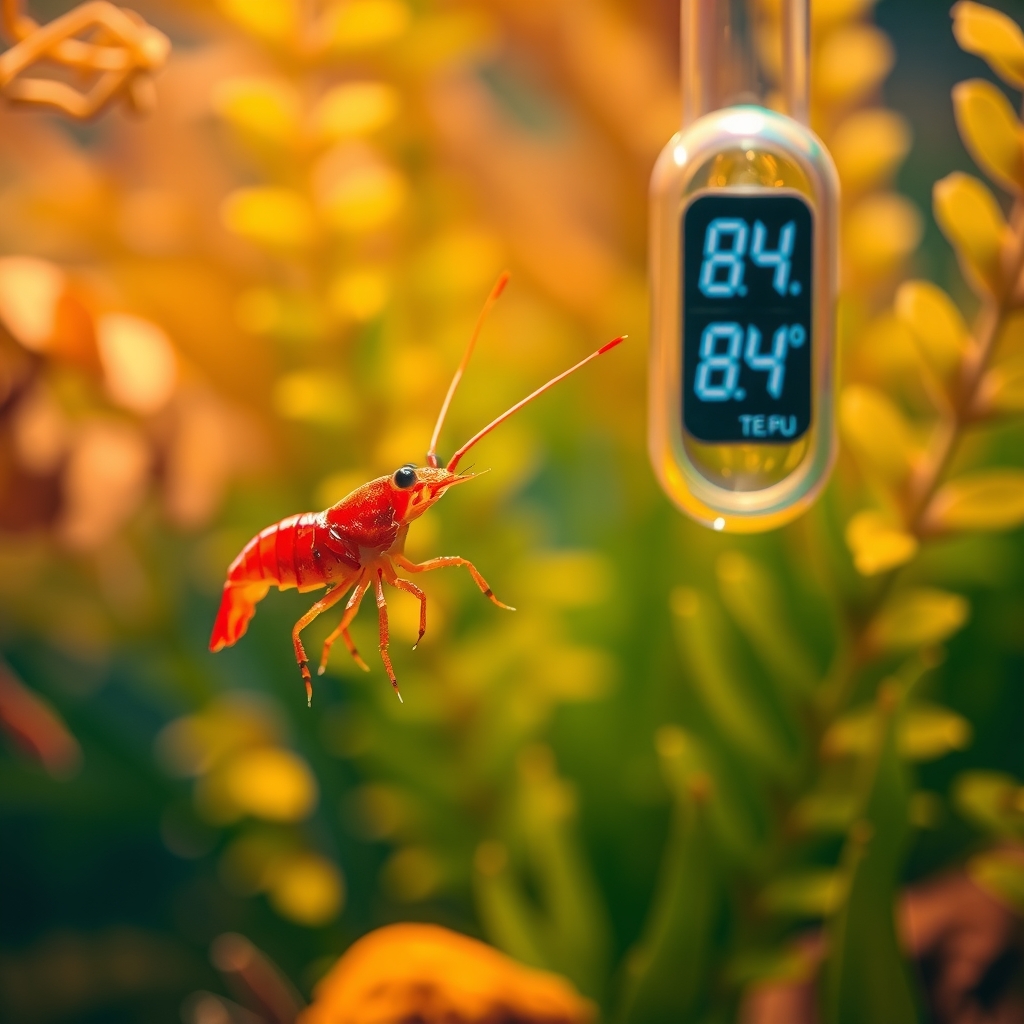
If your cherry shrimp are darting erratically, hovering near the filter output, or sitting listlessly at the water surface, the water temperature is likely above their safe limit. Cherry shrimp thrive best between 65°F and 80°F, and sustained temperatures over 82°F cause fatal heat stress.
Unlike fish, shrimp cannot regulate their internal body temperature. They are entirely at the mercy of the water chemistry in your tank. When that water heats up, their metabolism accelerates, oxygen levels drop, and their immune systems crash. You need to act within hours, not days, to prevent a total die-off.
What Temperature Is Too Hot?
There is a difference between "survivable" and "healthy." While Neocaridina davidi are hardy, they have a very narrow comfort zone compared to tropical fish.
- Optimal Breeding Range: 70°F – 74°F (21°C – 23°C). This is where they are most active and breed most consistently.
- Safe Maintenance Range: 65°F – 80°F (18°C – 27°C). They can live here long-term without issue.
- Stress Zone: 82°F – 84°F (28°C – 29°C). Metabolism spikes, lifespan shortens, and molting issues begin.
- Danger Zone: 86°F+ (30°C+). Organ failure is imminent. Oxygen saturation in the water is too low to support them.
If your tank hits the mid-80s during a summer heatwave, you are in the danger zone. The warmer the water gets, the less dissolved oxygen it can hold. Even if your filter is splashing away, a shrimp at 86°F is essentially suffocating.
5 Critical Symptoms of Heat Stress
Heat stress manifests in distinct behaviors. If you see one of these, check your thermometer immediately. If you see two or more, assume the tank is in the stress zone.
1. Erratic Darting and "Crazy Swimming"
A healthy shrimp grazes calmly. A hot shrimp panics. You will see sudden bursts of speed where they shoot across the tank, seemingly bouncing off the glass. This is often triggered by the irritation of their gills and nervous system due to low oxygen. It looks like they are trying to escape the water itself.
2. Hovering at the Surface or Filter Output
This is the shrimp equivalent of gasping for air. Warm water holds less oxygen, so the shrimp will congregate where the oxygen exchange is highest—the surface agitation or the outflow of a filter. If you see a line of red shrimp sitting at the very top of the water line, your oxygen levels are critically low.
3. Lethargy and Inactivity
Paradoxically, after the initial frantic phase, they may shut down. They will stop grazing, sit on the substrate without moving their antennae, and appear "sleepy." This is a sign that their metabolism is crashing. They often tilt to one side or lie flat. If you poke a healthy shrimp, it darts away. If you poke a heat-stressed shrimp and it doesn't react, the damage is severe.
4. Failed Molts
Heat speeds up their metabolism, causing them to try to molt too quickly. The new shell underneath isn't given enough time to calcify and harden. You will find shrimp that have died mid-molt, stuck in their old exoskeleton, or shrimp with soft, mushy bodies that cannot support themselves. High heat is a leading cause of "molt death syndrome."
5. Loss of Color and Opacity
Stress causes cherry shrimp to lose their vibrant red pigmentation. They may turn pale, translucent, or develop a milky, cloudy appearance. This opacity is often a sign of a bacterial infection taking hold, because heat stress suppresses their immune system, allowing naturally occurring bacteria to overwhelm them.
Why High Heat Is a Double Killer
The temperature itself isn't the only killer; it triggers a chain reaction in your tank.
First, the oxygen crash. Hot water physically cannot hold as much gas as cold water. As the temperature rises from 75°F to 85°F, the dissolved oxygen capacity drops significantly. Your shrimp suffocate while surrounded by water.
Second, bacterial blooms. The bacteria that break down waste also thrive in heat. They reproduce rapidly, consuming even more oxygen and producing ammonia spikes. A tank that was cycled and stable at 75°F can suddenly experience a mini-cycle at 82°F because the beneficial bacteria go into overdrive and then crash.
How to Cool Down a Hot Tank Fast
If you are seeing symptoms, you need to drop the temperature gradually. Do not shock them with ice-cold water, or they will die from osmotic shock.
The Frozen Bottle Method
This is the safest emergency hack. Take a clean plastic water bottle, fill it 90% with tank water (to avoid chlorine spikes if it leaks), and freeze it. Seal it tightly and float it in the tank. It acts as a large ice cube that cools the water slowly without changing the water chemistry. Replace it every few hours until the temperature drops below 80°F.
Increase Surface Agitation
Point your filter outlet upward or lower the water level so the filter "splashes" more. Every droplet that hits the surface pulls oxygen from the air. If you have an air pump, turn it on. You cannot over-oxygenate a tank that is 85°F; the shrimp need every molecule they can get.
The Fan Trick
Position a regular household fan so it blows across the surface of the water. Do not blow air into the water, but across it. This encourages evaporation, which cools the water significantly. Be warned: evaporation will happen fast, so keep a jug of treated water nearby to top off the tank level frequently.
Turn Off the Lights
Tank lights, especially LEDs, generate heat. Turn them off completely. The shrimp do not need light, and the darkness helps lower the ambient temperature around the tank.
Long-Term Prevention
Once the emergency is over, you need a plan for the next heatwave. For details on maintaining stable parameters year-round, check out our guide on Neocaridina water parameters.
If your room consistently stays above 78°F, you have two real options:
Relocate the tank: Move it to the coolest room in the house, preferably a basement or a room with tile floors that stays naturally cooler. Keep it away from direct windows.
Invest in a chiller: This is the only "set it and forget it" solution. Aquarium chillers are expensive, but they are the only way to guarantee safe temperatures in a room that hits 85°F or higher in the summer. Do not rely on "cooling fans" as a permanent solution; they stop working well when ambient humidity is high.
Heat stress is reversible if caught early. If you catch them darting at the surface and cool the tank down to 75°F within a few hours, they usually recover fully. However, if you find them laying on their sides and unresponsive, the internal damage is likely done. Prevention is infinitely cheaper than restocking a colony.
Common questions
Can I put ice cubes directly in the tank?
No. Ice made from tap water contains chlorine and chloramine that can kill shrimp instantly. Furthermore, the rapid localized temperature change can shock their system. Always use a frozen bottle of tank water instead.
Do cherry shrimp need a heater?
In most homes, no. Unless your house drops below 65°F (18°C) in the winter, cherry shrimp do not require a heater. In fact, a heater is more likely to cook them during a malfunction than save them from the cold.
Why are my shrimp dying after a water change during a heatwave?
If your replacement water is significantly colder than the tank water, the shock can kill them. Always match the new water temperature to the current tank temperature within 1-2 degrees before adding it during the summer.