Can Neocaridina Live with Caridina? Yes. Can They Breed? No.
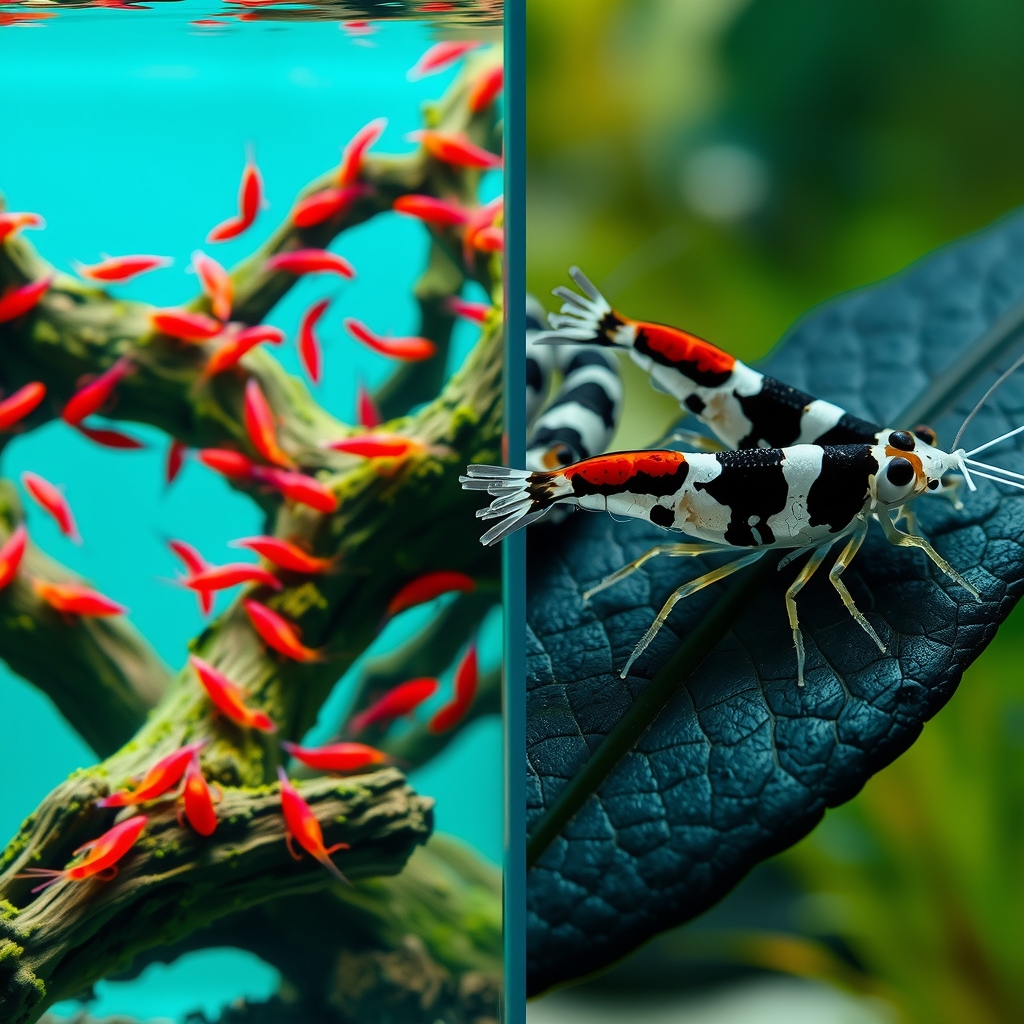
You can physically house them together, but you shouldn't. Caridina (like Crystal Red shrimp) and Neocaridina (like Cherry Shrimp) require vastly different water chemistry to thrive and breed. Keeping them in the same tank forces one species to live in water that prevents molting, causes shell erosion, or significantly shortens its lifespan.
The hobby often treats all dwarf shrimp as interchangeable, but they are adapted to completely different environments. Neocaridina are hardy scavengers evolved for variable, often harder water. Caridina are specialized for soft, acidic, stable creeks. Trying to find a "middle ground" usually results in a tank where neither species breeds and one slowly dies off.
The Core Conflict: Water Parameters
The primary reason you cannot keep these together is the hardness of the water. This is not a minor preference; it is a biological requirement for their survival functions.
Neocaridina (Cherry, Blue Dream, Rili) prefer alkaline, moderately hard water. They rely on calcium and magnesium to build their exoskeletons. Ideal parameters are generally a pH of 7.0 to 8.0, gH (general hardness) of 6–8, and kH (carbonate hardness) of 4–8. If you keep them in water that is too soft, they cannot form a strong shell, leading to failed molts and death.
Caridina (Crystal Red, Black King Kong, Taiwan Bee) require acidic, soft water. They are adapted to water with very little dissolved carbonate. Ideal parameters are a pH of 5.8 to 6.4, gH of 4–6, and kH of 0–2. In high-kH water, Caridina struggle to molt because their physiology cannot handle the excess minerals, often leading to bacterial infections or "molting fatigue."
If you target a pH of 7.0 as a compromise, you are keeping your Caridina in water that is much too hard and alkaline. They may survive for a few months, but they will likely stop breeding and suffer from shell erosion and stress-related deaths. Conversely, if you drop the pH to 6.2 for the Caridina, your Neocaridina will eventually fail to reproduce and their shells will become pitted and brittle.
Why a "Middle Ground" Tank Fails
Beginners often assume that if a parameter is "in the middle," both shrimp will be slightly unhappy but fine. This is incorrect. Shrimp health is binary in many regards: they are either building shells successfully, or they are not.
Caridina are particularly sensitive to Total Dissolved Solids (TDS). They thrive in a TDS range of 100–120 ppm. Neocaridina are comfortable at 150–200+ ppm. If you run the tank at 150 ppm to keep the Neocaridina happy, the Caridina will suffer. If you run it at 120 ppm, the Neocaridina may not die immediately, but they will not reach their full color potential or breeding capacity.
Furthermore, stability is the most critical factor for Caridina. They do not handle parameter swings well. Neocaridina are more forgiving, but when you mix species, you are constantly tempted to adjust the water to save the dying ones, causing instability that kills the healthy ones. You create a cycle of intervention that usually ends in a tank crash.
The Role of Substrate: Active vs. Inert
You cannot solve this problem with just water additives; the substrate dictates the tank's chemistry.
To keep Caridina, you generally use an active soil (like Akadama or Amazonia). This soil buffers the pH down to roughly 6.0 and absorbs carbonates to keep kH near zero. This substrate is essential for Caridina but is the wrong environment for Neocaridina. As active soil ages, it loses its buffering capacity and the pH rises, potentially crashing the tank if you aren't monitoring it closely. This volatility is dangerous for any shrimp, but Neocaridina have no business being in a tank designed to strip minerals from the water.
To keep Neocaridina, you use inert substrate (sand, gravel, or aquasoil that doesn't buffer). This allows you to maintain a higher kH and pH using crushed coral or limestone. If you put Caridina on inert substrate, you must inject CO2 or use RO (Reverse Osmosis) water with remineralizers specifically designed for soft water (Salty Shrimp GH+). This is a difficult maintenance regimen to sustain perfectly, and if you slip, the Caridina die.
If you mix the species, you have to choose one substrate. One species will be in the wrong home from day one.
What About Hybridization?
One of the most common questions is whether they will crossbreed. The short answer is: No, they will not.
Caridina and Neocaridina are different genera. They are as closely related as a dog is to a fox. They cannot produce offspring. If you see babies in a mixed tank, they are not hybrids; they are pure Neocaridina or pure Caridina.
However, the lack of hybridization doesn't make mixing safe. People often worry about "polluting the genetics" of their high-grade Crystal Reds with wild-type genes, but that is impossible. The real danger is purely environmental: the water that allows one genus to reproduce will eventually sterilize or kill the other.
The Exception: Tiger Shrimp
There is a tiny exception to the "don't mix" rule, though it is not for beginners. Caridina cantonensis sp. "Tiger" (such as the Orange Eye Blue Tiger or Black Tiger) are sometimes kept with Neocaridina.
Tigers are Caridina, but they are significantly more adaptable than Crystal Red or Taiwan Bee shrimp. They can tolerate a wider range of pH (6.5–7.5) and harder water. Experienced keepers sometimes maintain Tangerine Tigers or OEBT in parameters that overlap with high-grade Neocaridina.
Even this is risky. Tigers breed best in soft water, and Neocaridina breed best in hard water. Mixing them still involves a compromise where neither species is 100% optimized. If you are asking the foundational question of whether you can mix these two genera, you are likely not ready for the nuance required to manage a Tiger/Neo mixed tank.
The Verdict: Pick a Lane
The answer to "can I keep them together" is technically yes, but the answer to "should I" is a hard no.
Keeping them together is an exercise in watching slow failure. You will either have a tank full of reproducing Neocaridina and dwindling, expensive Caridina, or you will have a tank of Caridina breeding slowly while your Neocaridina struggle to molt.
If you want to keep both, set up two tanks. Use a sponge filter moved from an established tank to cycle the second one instantly. Give the Neocaridina inert sand and hard water, and give the Caridina active soil and soft water. It costs slightly more upfront, but it is the only way to succeed without killing your livestock.
Common questions
Will Caridina and Neocaridina crossbreed?
No. They are different genera and cannot produce offspring. Any babies in a mixed tank will be 100% one or the other.
What happens if I keep Crystal Reds with Cherry Shrimp?
The Crystal Reds will likely suffer from mineral buildup and failed molts because Cherries require harder, higher pH water. The Crystal Reds will eventually die off or stop breeding.
Can I use RO water to create a compromise for both?
You can mix RO water to hit a middle pH, but you still have to choose a kH level. High kH kills Caridina; zero kH causes pH crashes that kill Neocaridina. You cannot stabilize both simultaneously.
Which type is easier for beginners?
Neocaridina (Cherry shrimp) are significantly easier. They tolerate a wider range of water parameters and are more forgiving of water changes, making them ideal for first-time keepers.