Cherry Shrimp Stuck in Molt: Causes & Fixes
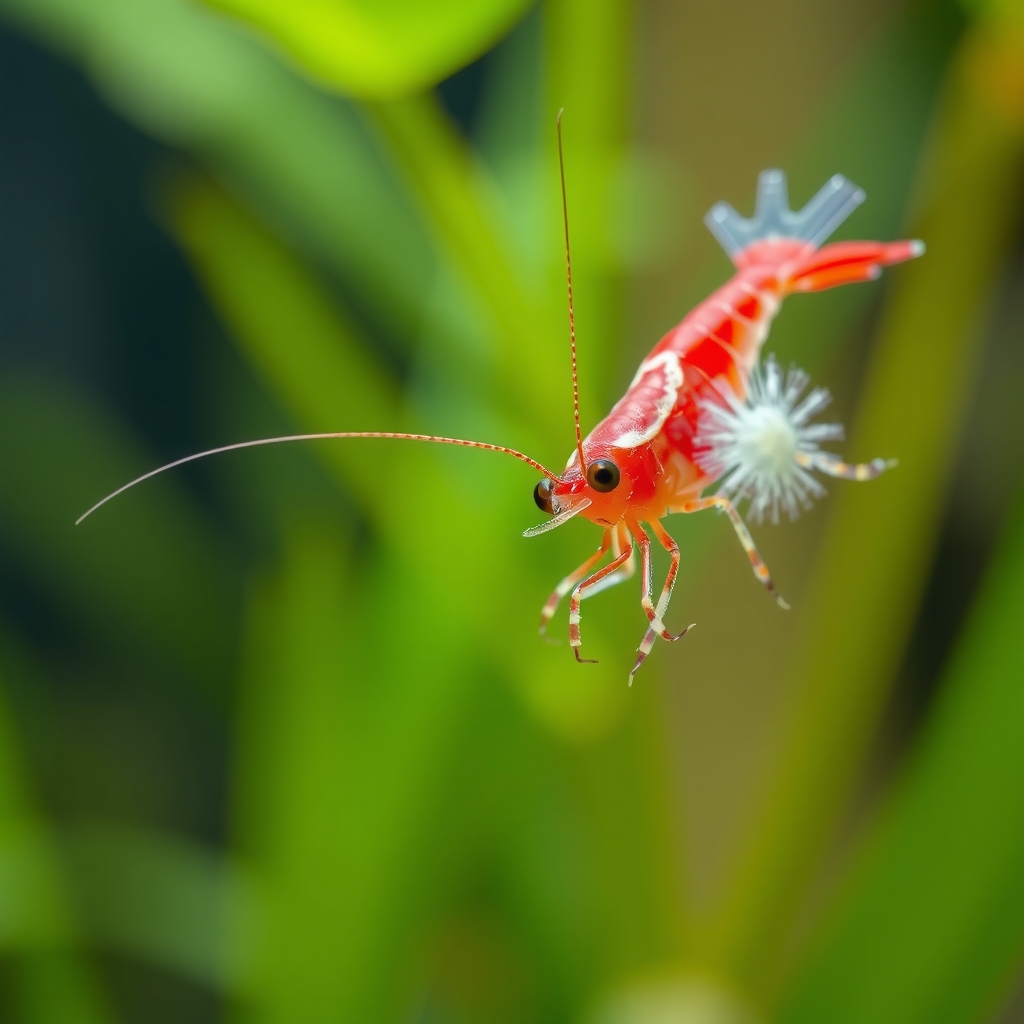
If your cherry shrimp is stuck in its molt, the most important rule is this: do not pull the shell off. Attempting to free a shrimp by hand almost always results in ripping off limbs or damaging the soft, new body underneath, which leads to a slow and painful death.
A successful molt is a complex biological process. Your shrimp must absorb water to crack the old exoskeleton, pull itself out backwards, and then harden a new, larger shell. When this process stalls, it is usually because the water chemistry does not provide the minerals required to build the new shell, or because stress has interrupted the hormonal sequence.
How to confirm they are actually stuck
Molting is exhausting. After emerging from the old shell (exuvia), a shrimp will hide and lie motionless for hours while its new shell hardens. It may appear white or translucent. This is normal. If you see a shriveled-looking shell next to a moving shrimp, the molt was successful.
You have a problem if the shrimp is still inside the old shell but active, or if you see the distinctive "white ring of death." This looks like a white band circling the shrimp's body, usually just behind the head. This is the old carapace (head shell) failing to detach from the body. The shrimp cannot move forward to exit, and it cannot move backward without getting stuck.
Primary cause: Mineral deficiency (GH)
The most common reason Neocaridina shrimp get stuck is a lack of General Hardness (GH). GH measures calcium and magnesium in the water. Shrimp use these minerals to build their exoskeleton. If the GH is too low, the new shell underneath is too soft to push the old, hard shell off, or the old shell doesn't crack open properly.
For cherry shrimp, you generally want a GH between 6–8 dGH. If your tank water is soft (below 4 dGH), the shrimp cannot generate the internal pressure needed to split the old exuvia. This is frequently an issue in tanks with inert substrates like plain gravel or sand, or when using RO (Reverse Osmosis) water without remineralization.
To fix this, do not dump medication in the tank. You need to increase the mineral content of the water. Use a dedicated shrimp remineralizer (like Salty Shrimp or Benebay) designed for Neocaridina. Follow the instructions on the package to raise the GH gradually. Sudden swings in parameters are dangerous, so aim for stability over speed.
Secondary cause: Temperature stress
Temperature dictates metabolism. In warmer water (above 78°F), the metabolism speeds up, and the shrimp cycles through minerals faster. In cooler water (below 68°F), the process slows down significantly.
The danger lies in fluctuation. If the room temperature drops 5 degrees overnight, the shrimp's metabolism halts, potentially trapping it mid-molt. If the heater malfunctions and spikes, the rapid biological processes can cause the shrimp to attempt a molt before it has physically built up enough reserves.
Maintain a stable range for cherry shrimp: 72–78°F. Use a heater with a thermostat, not just a preset one, and check it with a separate thermometer.
What to do right now
If you see a shrimp with a white ring of death, your options are limited. You cannot intervene physically without high risk of killing the shrimp. However, you can improve the environment immediately to give it the best chance of freeing itself.
- Add Mineral Powder: Dose a shrimp-specific mineralizer immediately. This raises the GH, which can help the new shell harden enough to push the old one off.
- Add Tannins: Drop an Indian Almond Leaf or a piece of alder cone into the tank. Tannins lower pH slightly and bind to heavy metals, but more importantly, they provide biofilm and antibacterial properties that keep the shrimp calm while it struggles.
- Turn off the lights: Bright lights stress shrimp. Darkness mimics their natural nocturnal molting rhythm and encourages them to hide and focus on the task at hand.
- Separate if necessary: Only if you have aggressive tankmates (like bettas or crayfish) should you move the shrimp. Use a small breeder box inside the main tank so the water parameters remain identical. Moving a stuck shrimp to a different cup with different parameters usually shocks it to death instantly.
Prevention: Diet and Water Stability
The best cure for a bad molt is a good diet. Shrimp don't just get calcium from the water; they get it from food. High-quality shrimp food contains vegetable matter (for gut health and energy) and animal proteins (for growth). However, for molting specifically, look for foods fortified with calcium or include feeding blanched cuttlebone (boiled to remove salt) or montmorillonite clay powder.
Consistency is more important than the perfect number. Do not perform massive water changes right before a scheduled molt if you can avoid it. A 50% water change with slightly different tap water parameters can shock the system and trigger a mass molt, leading to multiple casualties.
Identifying a bad molt vs. a death
Sometimes you will find a white, dead shrimp that looks like it is inside a shell, but it has been dead for days. This is often a shrimp that died during a previous molt and the bacteria have eaten the flesh, leaving the exoskeleton behind. If the shrimp is milky white but fuzzy, or if it falls apart when you nudge it with tweezers, it is a carcass. If the shrimp is trying to walk or swim but is dragging the old shell, it is stuck.
If the shrimp does not free itself within a few hours, the outcome is usually fatal. It is difficult to watch, but interfering usually speeds up the death. Focus on correcting the GH and temperature for the remaining shrimp in the tank, as they likely face the same deficiency.
Common questions
Can I pull the old shell off the shrimp?
No. Never pull the shell. The new shell underneath is extremely soft and sticky. Pulling will rip off the shrimp's head or legs, causing fatal injury.
Why is there a white ring around my shrimp's body?
That is the 'white ring of death.' It means the old head carapace has not detached, trapping the shrimp inside its old exuvia. It is usually caused by low GH (minerals).
How long does a cherry shrimp molt take?
The actual act of escaping the shell usually takes 1–5 minutes. However, they will hide for several hours afterwards to recover and harden their new shell.
Should I use iodine supplements for molting?
Generally, no. Shrimp get iodine from high-quality food. Liquid iodine supplements are easy to overdose and can be toxic. Focus on stabilizing GH and temperature instead.